elsa o’brien lópez
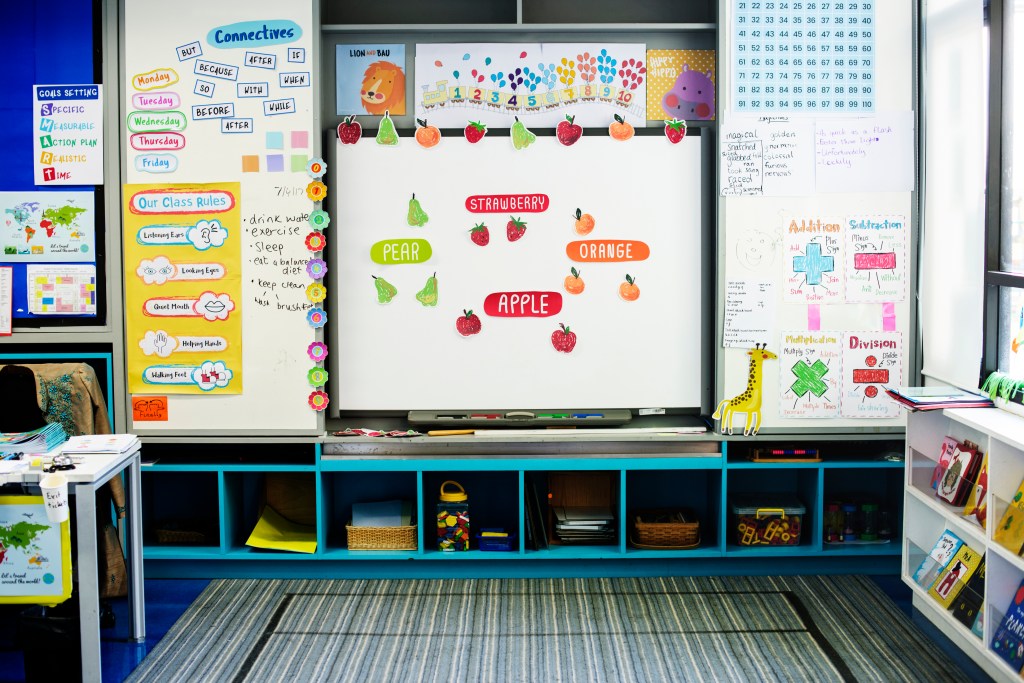
An inclusive classroom should make sure that the majority of learners can reach their full potential whatever their learning needs or styles. There are many simple and easy-to-implement strategies that a teacher can put in place to make sure the physical room they’re teaching in is helping scaffold their students’ learning process.
An inclusive classroom should make sure that the majority of learners can reach their full potential whatever their learning needs or styles. Education Endowment Foundation proposes 5 principles for high quality teaching that should make up for the majority of what takes place in a classroom, leaving only a fraction of a teacher’s and school’s efforts for targeted or specialised provision. The reality is that, if these principles become part of a teacher’s routine, the workload directed at preparing differentiated materials will be reduced as: good teaching for students with Special Educational Needs is good teaching for all.
There are many simple and easy-to-implement strategies that a teacher can put in place to make sure the physical room they’re teaching in is helping scaffold their students’ learning process. A lot of them have to do with externalising information (instructions, vocabulary, time) to make sure that students who might need additional support due to issues with their attention, working memory or level of English will have it.
Board
- Visual and clear class menu: The board should show a clear class menu with short staged steps. This will help our students anticipate what’s coming next, know how many steps are left before the break -and, hence, manage their impulsiveness and restlessness- and remember what’s expected from them. The teacher or students should tick off the steps as they go.
- Short, simple, staged instructions: These should be visible somewhere. It can be on another section of the board. However, students with a working memory deficit or who get easily distracted will benefit from having them scribbled down on a piece of paper in front of them. As with the board, they should get used to ticking them off. This will help them become more organised and autonomous learners.
- Can we use pictograms instead of or as well as written instructions? Teachers won’t need to be too arty to make sure their board work includes visuals to support their writing. Simple sketching will help support our learners’ understanding and help remember new words. Representative pictograms can also be printed and used systematically to represent the different stages of the class or a task.
- New vocabulary section: If room allows, always dedicating the same part of the board to recording new vocabulary will help students refer back to it if they are having trouble remembering it or are slow copying down. To promote learner autonomy, students themselves can be responsible for completing this list, providing the translation or adding a little sketch.
Walls
Walls should be used, in the same way as the board, to scaffold learning. Student-made toolkit posters can be displayed on the walls so that students can refer back to them whenever they can’t recall a word or phrase during a reading, speaking or writing activity. Asking students to add to them throughout the unit will encourage them to use them due to the sense of ownership. But it will also reinforce language acquisition as it will mean one more chance of being exposed to the new language.
It is important not to over-clutter a classroom’s walls. Research suggests that a middle-ground is ideal in terms of student performance.
Desks
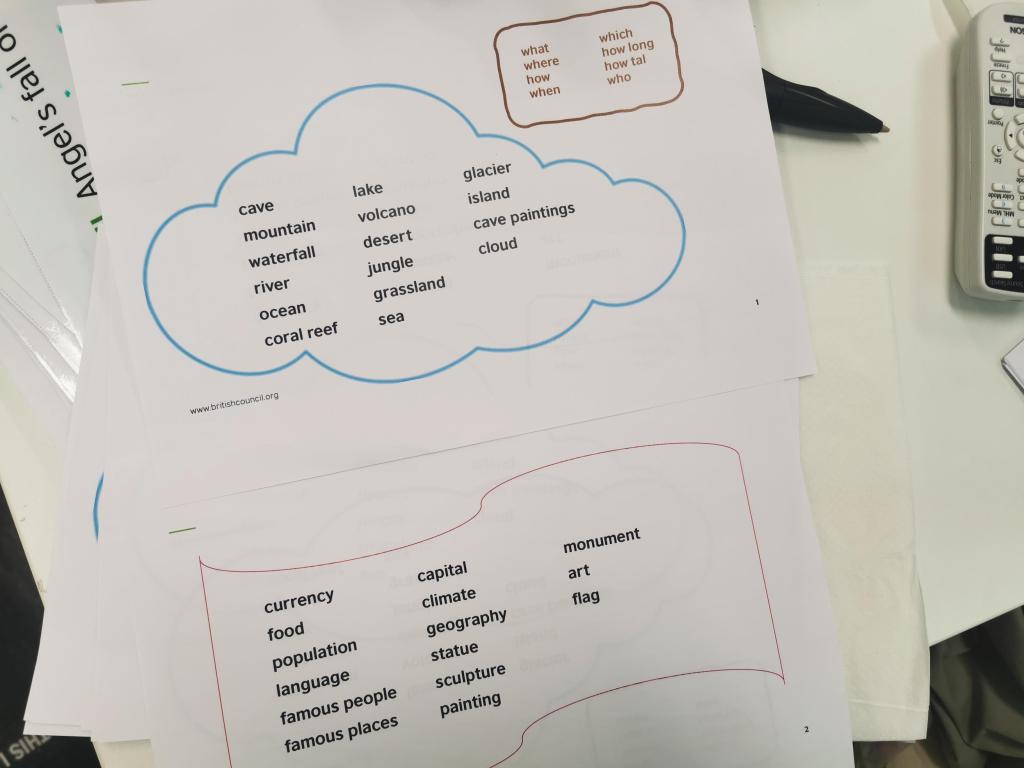
Despite all the visual support already listed, some students might not be able to benefit from it if, for instance, they have monotropic thinking or attention deficit. These learners will benefit from having short, simple, staged instructions right in front of them as well as wordclouds that are relevant to the activity they’re expected to use them in. Wordclouds can be prepared in advance or at the very last minute by hand. If students are working in groups, they can share a wordcloud to avoid singling out.

Corners
Every class will be made up of pupils with different skills and interests, without necessarily thinking about special educational needs. These differences will mean that, very often, there will be students waiting for something else to do whether because they’ve found a task too easy and are done, or too difficult or not enticing and they didn’t give it a go. Having students without an assignment can be very disruptive and prevent teachers from supporting those students who need it.
Continuous provision is a popular concept in Early Years teaching, but it can be easily applied to other stages. It’s about having ready to go activities that students are familiar with and know they can work on when they’ve finished their main task. In an ELT classroom, these could be: picture-word or word-translation matching cards, word ordering games, short worksheets or books from the library.
By consistently providing students with early-finishers activities, we are making sure they get additional exposure to the language and they can be working on something meaningful while other students can take the time they need to do the main task.
Dedicating a specific corner in the classroom to this purpose means these can also be used as time-out corners in the case of a sensory overload or for those students who are working on regulating their emotions.
Floor
Restlessness and fidgetiness can be barriers to learning. Allowing our students to work on the floor at different times can be a way of helping concentrate those students who struggle to sit still in a chair. Some activities that can be easily transferred to the floor are card matching or ordering tasks.
Asking students to go and find pieces of sentences or a text at the end of the corridor or in the patio is also an effective brain break using the space available.
Another easy way of fighting restlessness is allowing students to stand while they read or write. This doesn’t need to be talked about explicitly. Especially younger students who have difficulty sitting for a long time will often show their restlessness by sitting in unusual positions or half standing. Allowing these less conventional postures for working can help to compensate for the effort the students might already be making to keep focused or remember instructions.
MORE LIKE THIS:
-
10 Tips to support dyslexic students during writing tasks
-
Guidelines for marking dyslexic students’ work
-
The dyslexia-friendly language classroom
-
Tips to make reading tasks accessible for students with dyslexia
-
Is it possible to correct language mistakes during project-based learning?
-
Inclusive assessment for the English language classroom
-
Learning languages can benefit neurodivergent learners
-
Challenging gender bias in the classroom
-
How to help develop a child’s language without screens
-
Teaching English to Visually Impaired Students
-
What does an inclusive ESL classroom look like?
-
Teaching English to visually impaired students online
-
5 Easy classroom routines to increase language exposure
-
How project-based learning can make your lessons more inclusive
-
Do men and women speak differently?
-
Special educational needs and second language acquisition
-
How can Universal Design for Learning help with Language Teaching?
Subscribe for more posts like this
Speaker's Digest
Speaker’s Digest wants to make language learning accessible to all regardless of origin, socioeconomic background or learning styles and needs.
Who We Are
Proudly Powered by WordPress
 Speaker's Digest
Leave a comment